Jessica Grahn
  • Home
  • Research
    • Current Research
    • Research Opportunities
    • Research Articles
  • People
  • Repertoire
    • CV
    • Articles
  • Media
  • Women + Science
  • Personal
  • Links
    • Events

Music and Neuroscience Lab

Picture

About Dr. Grahn

_I am a cognitive neuroscientist who studies music, appointed as an assistant professor in the Brain and Mind Institute and the Department of Psychology at Western University, in London, Ontario.  Until recently I was at the MRC Cognition and Brain Sciences Unit in Cambridge, England, and an Associate Lecturer in Biological Psychology with the Open University. (And a little tip: Grahn rhymes with "on", not "an").

Research Interests

    Why do we move to music? How is musical rhythm processed in the brain? How do brain responses to musical rhythm differ from similar types of movement and timing? How and why do other animals' brain responses to music differ from ours? Can musical rhythm have therapeutic benefit? (more information).

    Other areas in which I have expertise include the use of real-time fMRI scanning to examine if people can change their own brain activity (neurofeedback), effects of training on cognitive function (brain training, musical training), and how listening to different types of music impacts memory.


Picture
Picture

Research Opportunities

    If you are interested in research opportunities in my lab, please get in touch.  
   
   
Undergraduate students should send me a CV, transcript, a sample of writing, as well as a short description of why they are interested in this area of research and the time commitment they are able to make. Students may want to read about important traits I look for in both undergrads and grads. Post-docs may want to look at the Banting Fellowships, Marie Curie fellowships (Europeans), CIHR Fellowships, NSERC Fellowships, or various other lists of fellowships.

Speaking with the Public

I enjoy discussing many aspects of how our brains work. I frequently comment on music and its effects on mood, intelligence, and the brain.
  • Why we move to music: CBC Radio interview
  • Mind Myths: BBC Radio 4: the Mozart Effect (15 minutes in)
  • Brain-centred learning in football, BBC Sport
  • Time magazine: Brain exercises don't improve cognition
  • BBC2 TV: does music make you smarter?
More on my Media page.


Picture

NEWS

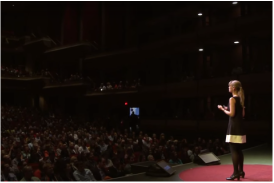
April: Dr. Grahn speaks at TEDxWestern

Does music make you smarter? Should babies listen to music to improve their brain development? The answers to these questions and more...
Watch the full talk here. 
 A recent interview about Mozart effect.

March: Dr. Grahn speaks at TEDxWaterloo

Picture
How do human responses to rhythm compare to other animals? What goes on in our brains when we're listening to music?

Watch live (offline link coming soon).

March: Working out to music (Scientific American)

Picture
Let's Get Physical: The Psychology of Effective Workout Music
New research clarifies why music and exercise make such a good team, and how to create an optimal workout playlist. Dr. Grahn contributes.

By Ferris Jabr


December: BBC2 TV interview on Dara O'Briain's Science Club

Picture
"In the final episode of the science series, Dara O Briain and his crack team take a weird and wonderful look at the science behind music."

August: Discover TV: music & the brain

Picture
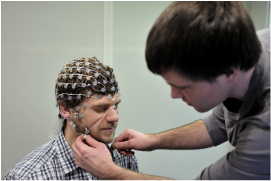
Jay's Body: Inside and Out: In one segment, Dr. Grahn scans Jay Ingram to show how his brain responds to music. Aired on the Discovery Channel on August 28th, 2012 (rhythm segment starts at ~4:20 in part 2).

August: Radio interview
Metamorphosis: CBC Radio episode about Dr. Ciccoria, a man struck by lightning who became obsessed with music. Dr. Grahn comments.


May: Early Researcher Award from Ontario Ministry for Economic Development and Innovation

This $150,000 award from the Ontario government will support trainees in the Grahn lab working on the relationship between music and the motor system in the brain, with the ultimate aim of tailoring musical rhythm to benefit patients with movement disorders. London Free Press.

April: Dr. Grahn awarded GRAMMY foundation grant

Picture

The music and neuroscience lab has been awarded a GRAMMY Foundation Research Grant to investigate the basis of musical rhythm perception, using the ultra-high field 7-Tesla MRI housed at Western's Robarts Research Institute. These funds will support research to discover the neural underpinnings of our uniquely human capacity for moving to music. This grant is one of only six scientific research grants awarded across all of North America. The project will be conducted in collaboration with ultra-high field MRI experts and Western scientists Stefan Everling and Joe Gati. April 2012.


March: CFI funds music and neuroscience lab

We are grateful to the Canadian Foundation for Innovation for funding our new lab.
You can listen to an interview about music and the brain and our lab's research on the CBC's Ontario Morning radio show.

The Laboratory for Neuroscience and Musical Rhythm Investigation will support research in several exciting areas, including:

1) How and why does music make us move? In particular, how does music influence different types of movement, and how can we optimize this effect for patients with disorders such as Parkinson's disease?

2) Can comparing the brains of humans and monkeys help us to understand why humans have developed a musical culture?

3) Why do some people 'feel the beat' easily, and while others have two left feet? How does musical or rhythmic ability relate to movement or language ability?

The CFI funding will enable us to purchase cutting-edge equipment in support of research into music and the brain. 

Fun stuff I do sometimes...

Picture
Picture
 Jessica Grahn
 Brain and Mind Institute
 Department of Psychology
 Natural Sciences Building, 229
 Western University
 London, ON, CANADA

Picture
Picture